

Cytogenetic biomonitoring
What is a cytogenetic biomonitoring study, and how might it help to understand the effects of EMFs on health? Here is how such a study is carried out and how it should be interpreted.
Numerous studies have investigated the potential link between extremely low-frequency electromagnetic fields (ELF-EMFs) and health over the past 40 years. ‘Short-term, high-intensity’ exposure has been well studied in human volunteers and animals. The effects observed have thresholds below which they do not occur and can be avoided by adhering to appropriate basic restrictions (electric fields induced in the body).
Questions have been raised regarding ‘long-term, low-intensity’ exposure. CM-EBFs are classified by the IARC as ‘possibly carcinogenic to humans’ on the basis of epidemiological data showing an increased risk of childhood leukaemia. Other studies raise the question of the role of 50 Hz EMFs in the development of cancer, Alzheimer’s disease and other illnesses. However, the studies do not allow for definitive conclusions, and further research is needed.
It is therefore important to determine the biological consequences in particularly vulnerable groups, such as workers exposed to EMFs. A cytogenetic biomonitoring study is useful for determining whether ELF EMFs can cause genetic damage.
Why a cytogenetic biomonitoring in studying health effects of EMF?
What is a biomonitoring study?
Human Biomonitoring has been defined as “monitoring activities in human beings, using biomarkers that focus on environmental exposures, diseases and/or disorders and genetic susceptibility, and their potential relationships” (http://www.eu-humanbiomonitoring.org/).
A biomarker, or biological marker, is something that can be measured in the human body. For example, it is of interest to evaluate exposure to toxic agents in the environment, by measuring their presence in blood or urine for example. There are several different categories of biomarkers (Verschaeve, 2015):
- Biomarkers of exposure: They are early effect markers. They show the presence of something that may result, but did not evolve yet, in disease or damage, e.g. increased mercury levels in the blood reflecting excessive exposure to this metal or benzene metabolites in urine for traffic-related pollution.
- Biomarkers of effects: They show a biological effect that can be associated with an established or possible illness or with precursors of illness, e.g. the concentration of beta-microglobulin in urine or cystatin C in serum as markers for renal insufficiency.
- Biomarkers of susceptibility/sensitivity: They are indicators of innate or acquired susceptibilities against certain agents and in the development of particular diseases, e.g. variations of certain genes that are associated with breast cancer.
What is a cytogenetic biomonitoring study?
A cytogenetic biomonitoring study aimed to detect changes in the genetic materials (chromosomes) of cells.
This is of importance because a link has been established between observed genetic damages in cells of people and an increased cancer risk. Figure 1 shows the sequence of events linking exposure to a genotoxic agent and the development of a disease:
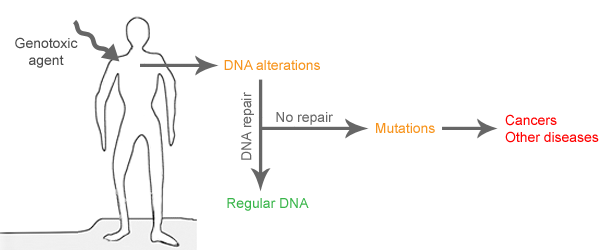
Figure 1 – Sequence of events linking exposure to a genotoxic agent and the development of a disease
The increased frequency of structural chromosome aberrations is considered as a biomarker of both exposure and effect.
Examples of test used in cytogenetic biomonitoring studies
There are numerous tests available to assess the effects of a substance on cells. Here are some of the most important ones: the micronucleus/cytome test and the comet assay.
Human lymphocytes are useful and readily available cells for assessing the extent and/or cumulative effect of exposure to genotoxic agents. Other cells, such as exfoliated buccal cells, are also sometimes used.
Why a cytogenetic biomonitoring study?
Contrarily to biomonitoring considering only specific markers (e.g., heavy metals), cytogenetic biomonitoring studies integrate exposures to all (genotoxic) agents. They can be conducted on people allegedly exposed to any agent of risk, including electromagnetic fields, to determine whether or not agents in the environment or in the workplace induce genetic damage in the investigated human cells.
Increased frequencies of genetic damage in cells from exposed vs. unexposed control subjects mean that there was an abnormal high exposure to (an) agent(s) able to damage the hereditary material and hence potentially able to induce cancer and other related diseases. A shortcoming of a cytogenetic biomonitoring study is that an increased frequency of genetic damages cannot be directly linked to (a) defined agent(s). It is particularly interesting as a ‘first line’ study, to quickly and globally test the environment around homes or workplaces.
Let’s see how such studies need to be conducted to provide useful results.
How to conduct such studies?
In (cytogenetic) biomonitoring studies two different populations are compared (e.g. radiation exposed subjects versus non-irradiated controls, etc.). The selection of the test persons is very crucial. It should be carefully done in order to avoid confounders as much as possible (figure 2). Confounders are other agents or characteristics/habits of people that could also enhance the frequencies of chromosomal damages. They can therefore influence the test results. Typically, to avoid confounders, both populations need to be as identical as possible with respect to their age distribution, gender, smoking habits, drug use or drinking behaviour, their social status, their origin and medical history (e.g., recent diagnostic irradiations, medications, viral infections).
Sample collection from volunteers should thus best be accompanied by carefully designed interviews or by questionnaires that consider these factors.
The studied populations should furthermore be large enough and the number of (blood)cells investigated should also be large enough to obtain sufficient statistical power.
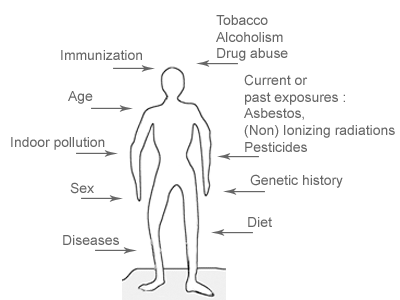
Figure 2 – Confounders in cytogenetic biomonitoring
How to interpret results and conclude?
Interpreting such trials is tricky and requires comparison with a matched control group, as described above. Moreover results are mainly interpretable at the group level and not at the individual level, as no limit decision values for cancers or other diseases are defined. However some further analysis should be conducted to apprehend the origin of unexpectedly high level of genetic damages in a particular individual.
In interpreting the results, a decision-making tree is applied (figure 3)
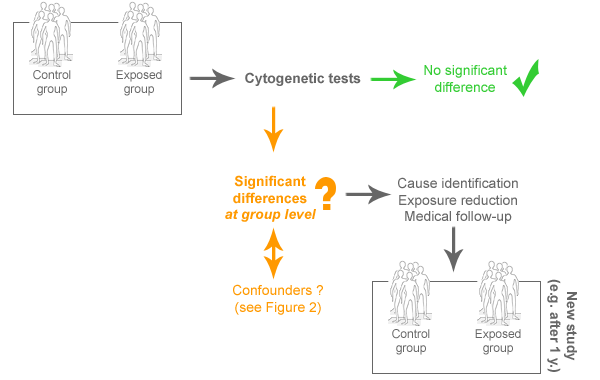
Figure 3 – Decision-making tree in cytogenetic biomonitoring
In case effects are observed at group level some measures should be envisaged to lower the exposure level. In occupational exposure, the aim will be to create better working conditions through implementation of measures to reduce exposure to mutagens/carcinogens in the work environment.
Ethical considerations: Could cytogenetic studies be used to identify people genetically at risk?
As results are mainly interpreting at group level, cytogenetic biomonitoring studies cannot be used to select workers and exclude the more susceptible ones.
The primary purpose of cytogenetic biomonitoring is scientific bearing in mind the protection of people’s health. It must be seen as a tool for the biosurveillance of carcinogenic risks related to the environment and the workplace.
Documents & Links
- Verschaeve, L. (2015). Genetic toxicology: tests and applications. Antwerpen, Belgium: University Press Antwerp.